Tarsheed Educational Publications
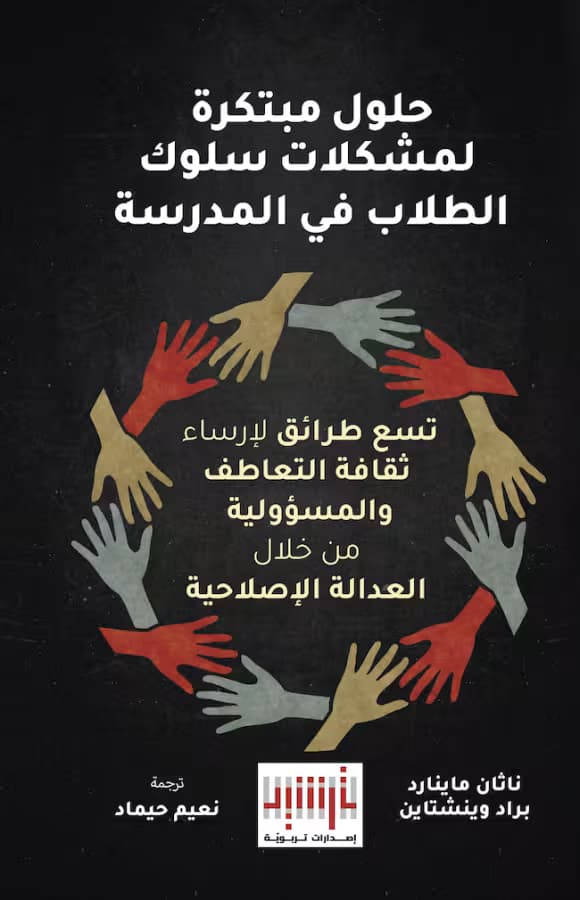
The importance of this book lies in the relevance and complexity of its subject, which motivated its translation and publication in Arabic. Behavioral challenges in schools are multifaceted, and approaches to addressing them vary widely among teachers and school administrations. These challenges differ in type and severity, and their impact extends beyond students themselves to affect the entire learning process and, ultimately, society as a whole.
Part of the challenge also lies in the wide range of disciplinary measures used in schools and their varying effects on students. This raises important questions: Have these measures truly contributed to creating a positive and well-managed school environment? Or have they, in some cases, exacerbated problems and negatively affected students’ wellbeing? Can such a complex issue be addressed through a single approach? Or should strategies be adapted to respond to the diverse needs of students?
In response, the book presents a practical, applied approach based on restorative practices - an approach commonly used in formal justice systems. In the school context, restorative practices include a range of strategies that help build positive relationships and resolve conflicts in ways that promote understanding, reflection, and improved future behavior among students. This approach helps foster a positive school climate that encourages dialogue, listening, participation, and mutual respect.
“School climate is not created through better policies, but through better relationships,” note the authors. Within this perspective, policies are designed to support the school community in aligning practices and promoting positive, consistent approaches.
This book offers teachers and school leaders a practical guide built around nine innovative approaches based on restorative practices, illustrated through real-life situations commonly encountered in schools. It encourages educators to experiment with new strategies that support more effective classroom management, while helping students take responsibility for their behavior and actively participate in addressing the consequences of their actions.
The book also advocates moving away from predetermined punitive measures that often result in removing students from the classroom, sometimes reinforcing the very behavior they seek to avoid. Such exclusion can prevent students from reflecting on their actions and taking responsibility, while also distancing them from their peers and from the relationships that could support meaningful behavioral change. Instead, the book promotes collaborative approaches that help analyze behavior, identify those affected, and determine appropriate responses, ultimately reducing the likelihood of repeated incidents.
The book spans 192 medium-format pages and is organized into nine chapters. Each chapter presents a specific problem, a proposed solution, and practical guidance for addressing similar situations in the future. It also includes step-by-step implementation frameworks, as well as reflections on challenges encountered in practice and ways to address them, providing a comprehensive understanding of each case.
The book is distributed in partnership with the Arab Institution for Studies and Publishing and is available across the Arab world and at major book fairs.
Publication Date: 2022
Publisher: Tarsheed Educational Publications
Paperback Language: Arabic
First Edition
Number of Pages: 192