Tarsheed Educational Publications
The Inquiry Mindset focuses on empowering learners with the tools, concepts, and skills needed to make a meaningful difference in the world. It explains the inquiry process, how it can be implemented in classrooms, and what learners gain from it over the course of a school year. According to the author, when teachers adopt an inquiry-based philosophy, it can transform both teaching practices and students’ perceptions of learning in lasting ways.
The book is grounded in the author’s personal experience as a parent, reflecting on his child as a unique learner. This perspective led him to critically examine his own teaching practices and to recognize the importance of responding to the individual needs and interests of each student. As a result, he began to approach all learners as unique individuals deserving recognition; an approach that, in turn, shaped his role as a teacher through students’ responses and engagement.
Across twelve chapters that combine both theory and practice, the book offers a practical guide enriched with activities and visual materials for teachers interested in fostering inquiry among their students. It begins by exploring the characteristics of the “inquiring teacher,” followed by a chapter outlining ten reasons for adopting inquiry-based learning. It then introduces what the author calls the “Inquiry Cycle,” detailing its stages and processes, supported by case studies for each phase.
Subsequent chapters examine four types of student inquiry and provide methodologies for supporting, organizing, and developing each type, alongside activities and resources applicable across all grade levels. The book also highlights “free inquiry” as one of the most powerful and effective forms of inquiry, presenting it as a journey that requires guidance, offered through a structured set of teacher questions designed to connect inquiry meaningfully to learning and curriculum.
The book further explores the four pillars of inquiry, supported by multimedia resources such as documentaries and visual materials. Emphasizing the idea that “the most powerful shift in adopting inquiry-based practice is to begin learning with a question,” it examines the role of questioning in depth, including classifications, tools, and strategies to support its implementation in classrooms.
One chapter is dedicated to the teacher-librarian as a key partner in fostering inquiry, highlighting ways to transform libraries into dynamic spaces for exploration. Another focuses on making inquiry visible through modern techniques such as audio and visual documentation, allowing inquiry to become an ongoing presence within the school environment.
The book also explores public presentations - such as exhibitions, museum displays, and school-based showcases - as opportunities for students to demonstrate and deepen understanding. It highlights the role of digital tools, particularly blogging, as a powerful means of documenting and extending learning across all educational stages.
A dedicated chapter on the “Inquiry Environment” offers practical suggestions for transforming schools into inquiry-driven spaces. The final chapter situates inquiry within the context of inclusive education, emphasizing that all learners can shape their own learning when provided with the necessary understanding and cognitive tools. It draws on principles of universal design for learning and highlights strategies for differentiation within inclusive classrooms.
At the end of each chapter, the book includes a call to action, “The Inquiry Mindset: Let’s Share”, encouraging teachers to exchange ideas, activities, and experiences through professional communities and social media. The book concludes with a glossary of educational terms compiled by the translator, contributing to the standardization of educational terminology in Arabic.
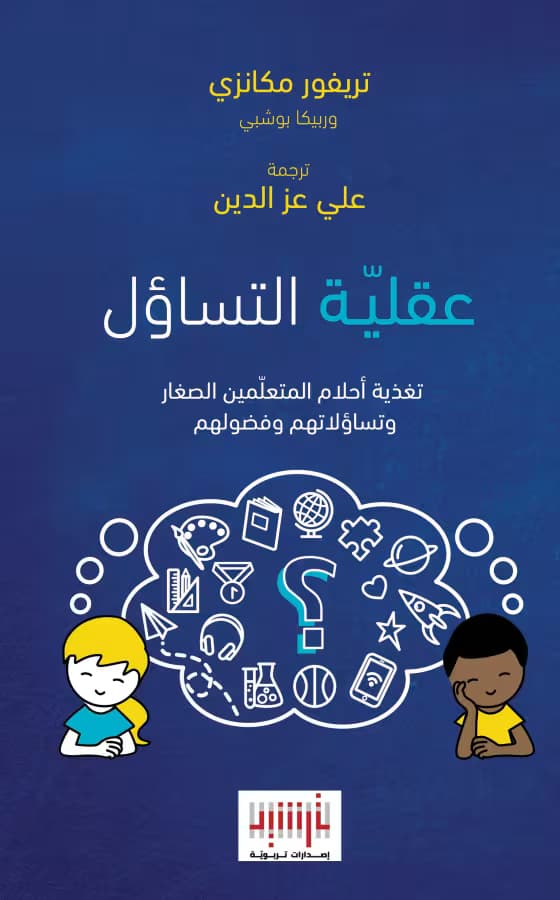
Publication Date: April 20, 2022
Publisher: Tarsheed Educational Publications
Paperback
Language:
Arabic
First Edition
Number of Pages: 208